

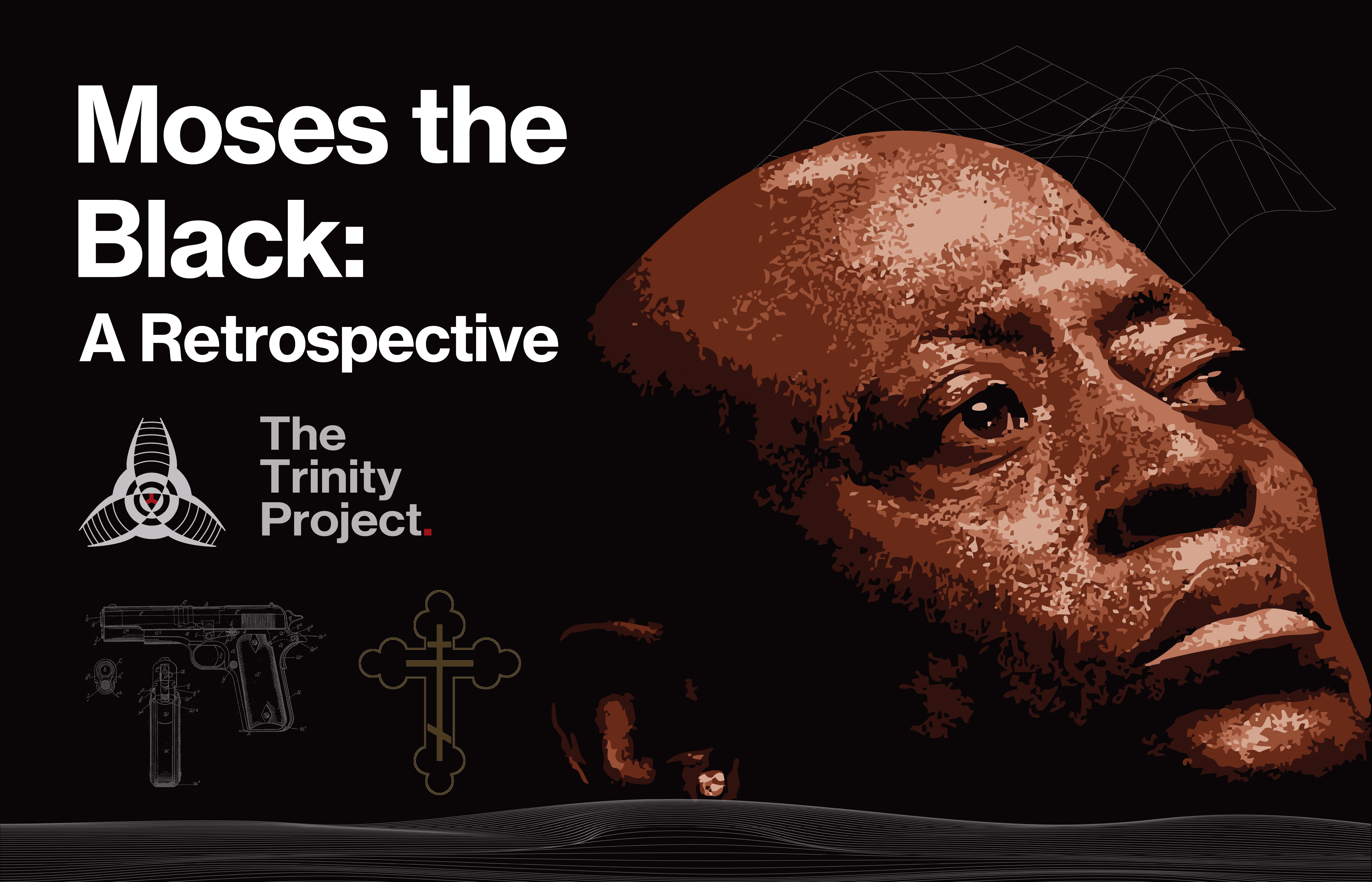
Moses the Black: A Retrospective
Can Orthodoxy Heal Black America?

Note: there will inevitably be spoilers (you were warned), but I don’t intend to give a full summary of the film’s plot here.
In Moses the Black Dr.Eric Foreman trades his stethoscope and lab coat for a tech 9 and black hoodie, with a side of Orthodox iconography, returning to his life of crime while feeling the pull of Christ. In all seriousness, Omar Epps shows his incredible range in this film depicting a deeply conflicted man. In it’s finest moments, this film trades the heavy handed political overtones of Blaxploitation1 films or slavery dramas for more spiritual nuances that would feel just as at home in the Martin Scorsese film Silence. At it’s most confusing, the film gets dragged into too many different directions due to a feeling of “too many cooks”, but overall I find myself forgiving the flaws of this film. Near Hollywood grade Orthodox films are a novel concept, even in comparison to explicitly religious films from Roman Catholic writers and directors. The fact this film got made, considering the corruption in the film industry, should be considered a miracle and blessing.
Perhaps the most dangerous “favor” done to blacks has been the making of excuses for all their problems. All human beings are so imperfect, no matter what color wrapping they come in, that to exempt any group from the standards of performance and behavior expected of others is not a blessing but a curse. -Thomas Sowell
A Black History Lesson
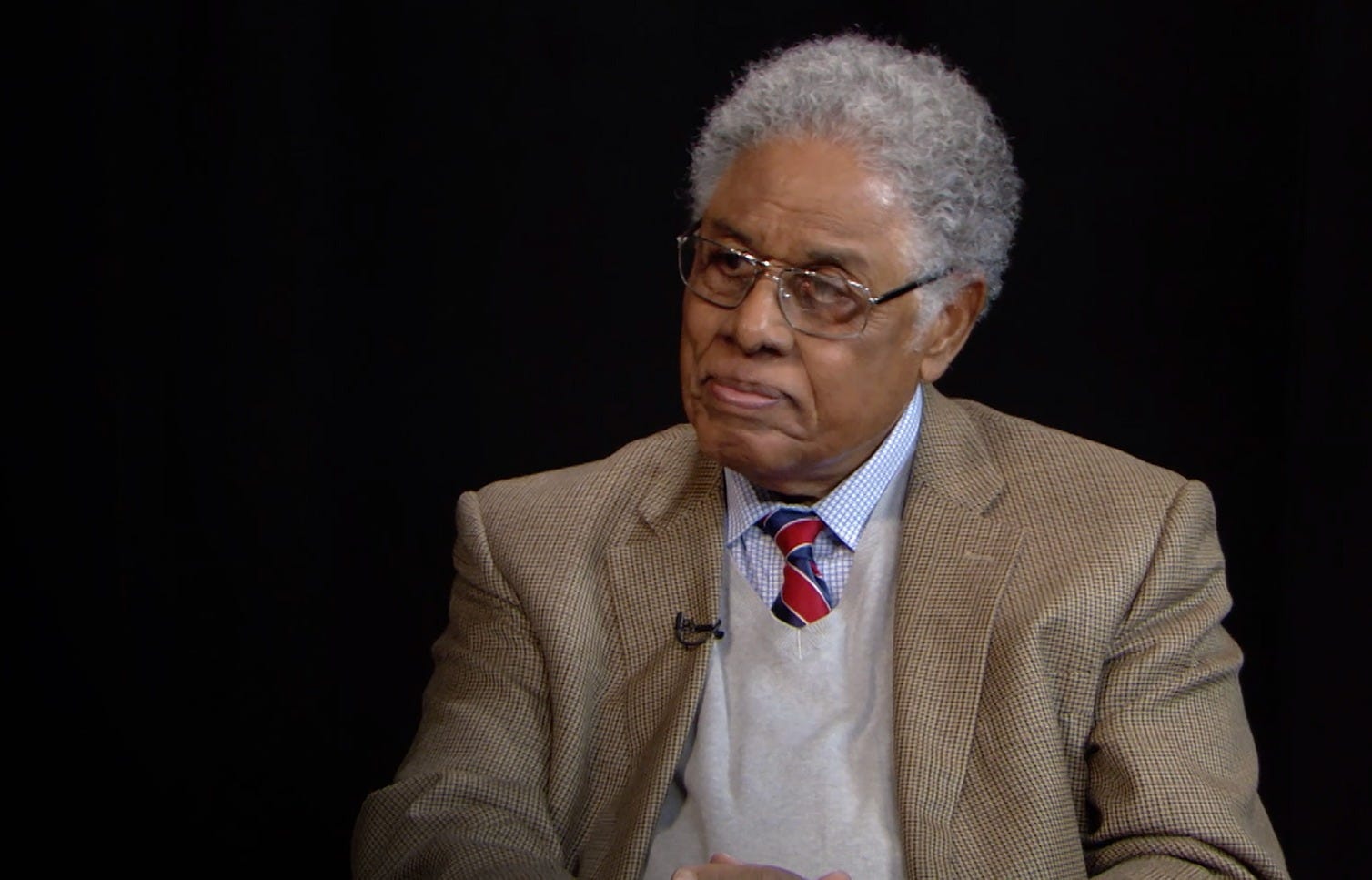
As a white man, there are limitations to my perspective of this film, but it appears to me this film humanizes inner city black communities in a way that emphasizes redemption without obsessing over blame. It doesn’t ignore potential injustices within the justice system and the economic conditions fostering crime, but it doesn’t stoke racial tensions as a culturally Marxist means to attack middle class white people. Instead, this film addresses the underlying nihilism in gang-culture, something conscious hip-hop artists often allude to. The film shows that when brother kills brother, a community will never be able to lift itself up from the greatest oppressions of sin. Controversial African American author and economist Thomas Sowell often draws a lot of ire for his alternative view of black culture, but logically it’s hard to find fault and inconsistency with his words. In his “Black History Lesson”, Sowell explains that while white liberals outwardly aiming to help the black community, their material gifts by means of government assistance typically fail to fix the underlying issues holding back the black community. Sowell claims that instead the black community really needs “education, law and order, and the family”, all things that seem to fall exactly in line with a Christian world view, especially an Orthodox one. If there would be anything missing from this equation, it would be that spiritual healing and awakening must precede the attainment of such goals.
You Are The Problem
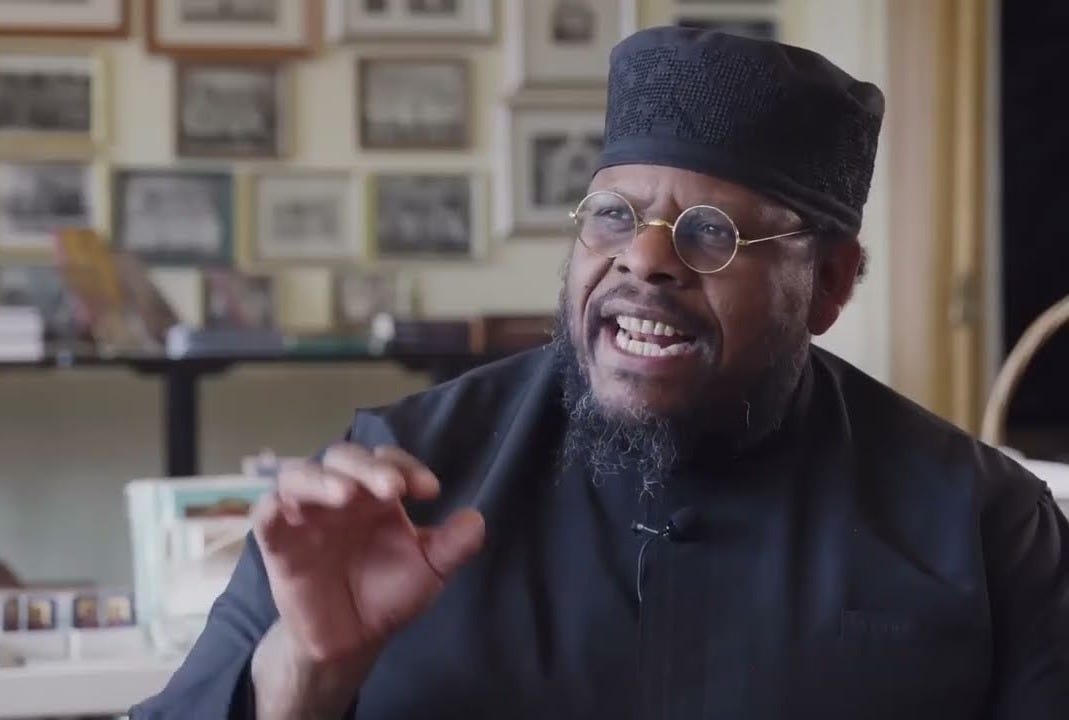
Why should African Americans trust white agnostic liberals and the failed political promises of the Democrat party to “lift up the black community”, when one of the most dangerous place for a black child is in his mother’s womb?2 Unlike some radical political movement, Orthodox Christianity does not claim to solve all of your problems, nor does it tolerate a “Sunday only” Christianity that we see represented in Moses the Black through Malik’s childhood friend and active gang associate Mike. Instead, Orthodox Christianity requires that we strive to be internally consistent and defeat personal demons. It’s just as Father Turbo Qualls, featured in this film, says: “you are the problem”, while cautioning us not to externalize our problems. Notably, all of the crime and devastation in this film comes from externalizing problems, and it never yields peace. However, when you want to consolidate political or social power, it’s often profitable to externalize people’s problems, even where more stoic, or even Christian, principles might better actualize change on both a personal and community level. While this film shows us there are systematic issues, it avoids the cliche messaging of “voting problems away”, a cheap “paying it forward” gimmick, or worst of all calls for color revolutions and violence. It also preaches a message of hope straight from Father Turbo, with the statement that if the worst criminal can repent and be saved, then all of us have a hope of salvation.
An Orthodox Scorsese?
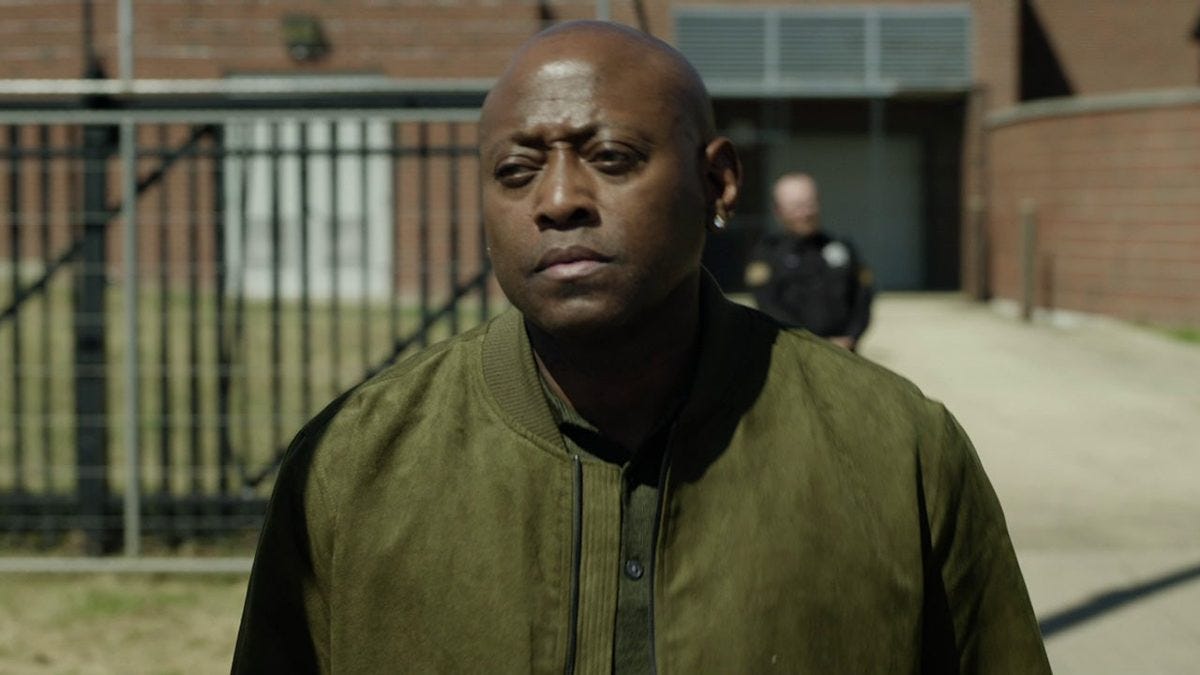
When members of Malik’s gang bully the young gangster Lil B (no relation to the rapper), without his knowledge, this troubled young man lashes out and kills his tormenter, thus perpetuating even more violence. While a lot of gang movies depict violent figures as irrational and power hungry brutes, this film depicts how violence can perhaps come at the hands of a sensitive young man. In expanding on the earlier comparison to Scorsese’s Silence, I believe Lil B’s arc somewhat parallels the arc of Tommy Devito, played by Joe Pesci, in Martin Scorsese classic film Goodfellas. At one point Tommy shoots and kills a teenager named Spider, played by Michael Imperioli, based solely on an insult, and later in the film Mob leadership executes him for participating in another reckless murder, in this case of a “made man”. In both films, the death of key characters reinforces the notion that “he who lives by the sword, dies by the sword”. Malik’s arc also mirrors the arc of Robert De Niro’s character Travis Bickle in the film Taxi driver.
While Malik’s character isn’t the same type of loner as Travis Bickle, he still spends much of this film either entirely alone or in existential isolation because of the situation he finds himself in. In both films, there is a build up to some act of violence that each character seems fated to carry out, and while these films end in a different way, both characters make an active choice to change their destiny. Perhaps the difference in the endings of these somewhat similar films shows a difference in the world views of Roman Catholics and Orthodox Christians or a general change in world views across generations. While Travis Bickle redirects his violence towards a more righteous cause, Malik chooses the route of self sacrifice, but in both cases we are left with an ambiguity as to whether our protagonist made the right choice. One leaves us to question whether our protagonist was really a hero, and the other leaves us to question whether our protagonist was really a martyr. In real life, things often aren’t so clear cut and truly only God can judge. Both Scorsese and Yelena Popovic seem to lean heavily on magical realism3 throughout their works, which I would offer as a possible explanation for the significant overlap in thematic elements….or perhaps she just read it in one of those movie writing books like Christopher Moltisanti.
True to Life
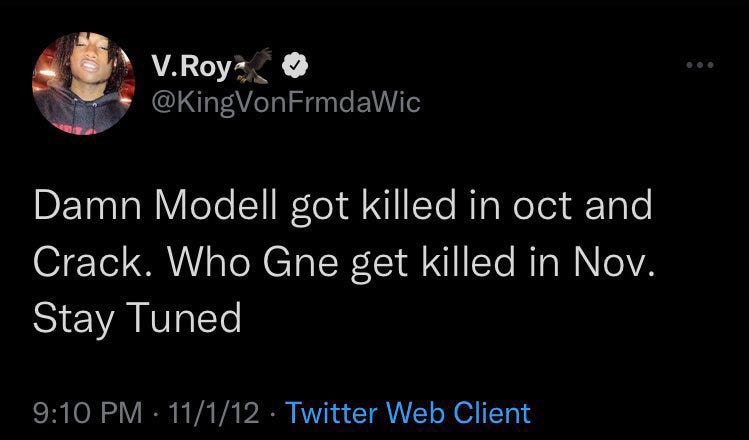
I don’t know enough about the pre-production of this film to know how much it drew from real events, besides the hagiography of St.Moses the Black, but I think the influence of current events would be impossible to avoid in any case. I can’t help but associate the plot of Moses the Black with the viral YouTube documentary “King Von: Rap’s First Serial Killer” and the events of Chicago native King Von’s life as a gangster in O-Block. I would go far as to suggest that the antagonist of the film Straw, played by Quavo, draws inspiration from King Von, while his killer “Lil B” possibly draws some inspiration from female street gangster Gakirah Barnes, aka Lil Snoop, who tweeted under the name “NO SURRENDER LIL B”. The documentary of King Von shows that many gangsters and gang affiliated rappers will brag about past killings and threaten future killings on social media, primarily “IG” and Twitter (now X), using veiled language and emojis. If you want to some evidence in the form of King Von’s tweets, many of them are still up on his Twitter “KingVonFrmdaWic” as of February 2026.
While real gangster rappers always existed, the norm used to at most fake or retired gangsters spinning hyperbolic tales. However, in recent times things have reached the point where rappers frequently tell on themselves in their songs, with lyrics gaining not just gaining the spotlight in hip hop journalism, but coming to light as evidence in court. While it might seem in poor taste, referring to a prolific gangster as a “serial killer” actually humanizes victims in a similar way to how Moses the Black humanizes the loss of life, and points to the suffering of women and children instead of glorifying the life of crime. It also shows us how fictionalized violence, bravado, and internet taunting can quickly devolve into real life ending violence.
[Censored] Technology
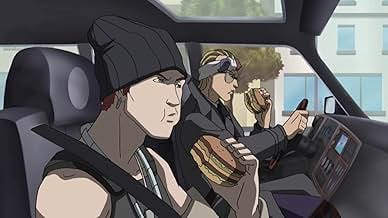
Acute viewers might have noticed how technology plays a key role in Moses the Black. I find it ironic that the Adult Swim show and African America made satirization of both black and white culture The Boondocks picked up the consequence of technology largely before smartphones took over the world. In The Boondocks season 1 episode 11 “Ed and Rummy”, the character Gin Rummy, played by Samuel L. Jackson, coins the term “N***a Technology”4, stating that “…nothing typed by someone’s thumbs has ever been important” and defining it as “anything that can’t connect to a printer”. In Moses the Black, we see that this sort of consumer grade technology often acts as an accelerant for imbecilic behavior amongst Malik’s street soldiers and their rival gang. It also creates further divisions between people in excess of what would come from in person interaction. On the other hand, we see that Malik uses his smartphone to easily research St.Moses the Black and to further immerse himself in Church History and scripture5. Thus technology in this film does not present as pure evil or good in itself, but as something that will hasten you in whatever direction you are already heading. As with many human inventions, their can be good and bad uses, and the new digital world does not summon novel evil or good which was not already present within humanity. I think some short sighted reviewers might find the more negative depictions of contemporary black cultural in this film offensive, but I think at times it’s trying to do a similar thing to The Boondocks, which frequently satirized pop culture degeneracy, gangster rap, and BET. One of the things we do seem to lose with brain rot and short attention span, is this ability to understand the nuances, and intentions of satire to help reform culture.
How Do I Rate This Film?
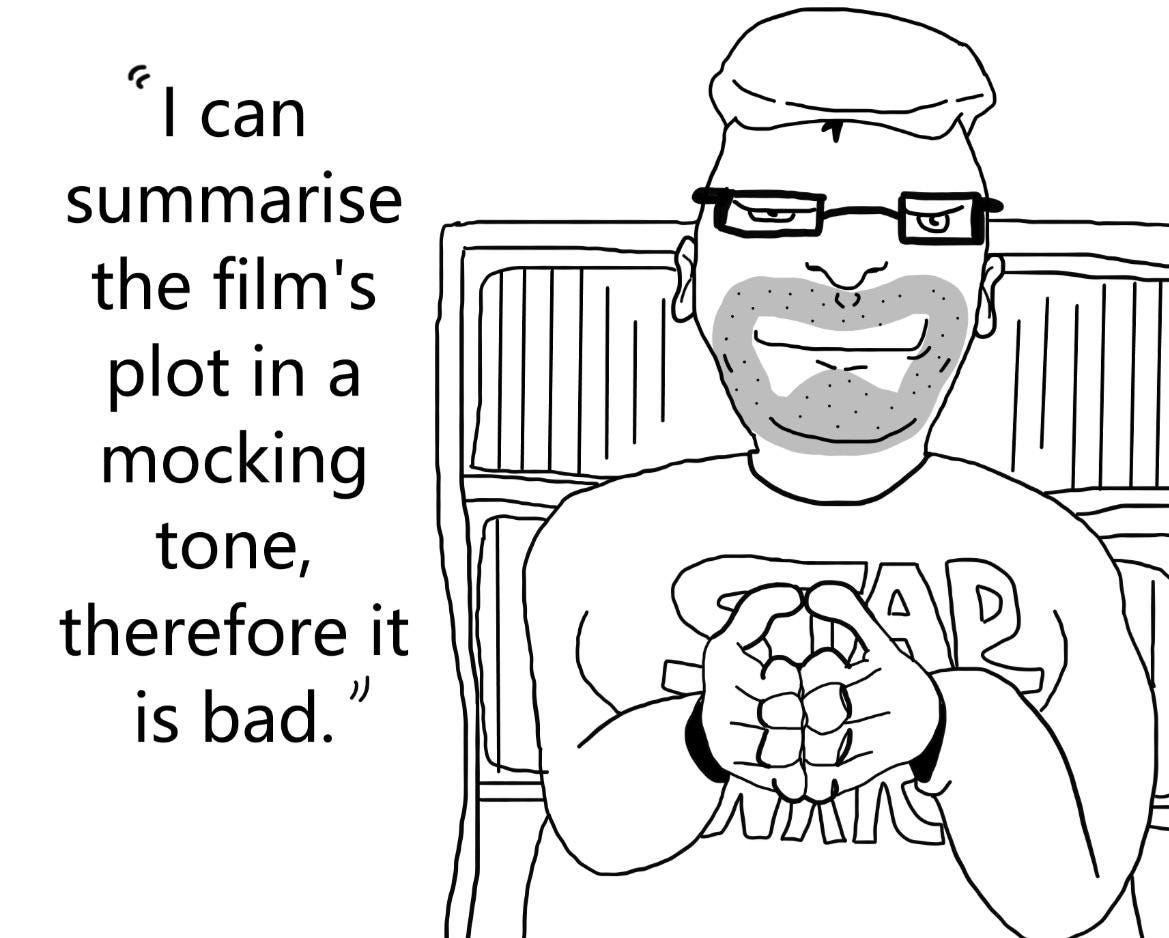
I called this article a retrospective, because “review” would imply I aim to be a tastemaker like Anthony Fantano or Roger Ebert. As an artistic type my expectations of films are very high, so I’m always going to have little niggles about pacing and out of place plot elements which may ultimately “miss the forest for the trees”. For the budget, and for a foray into new territory, I think the film should be commended, and I would generally recommend watching the film based on how it encouraged me to think more conscientiously. Admittedly, certain quirks of the film jumped out to me more than others, like the more overt Orthodox elements feeling sometimes “thrown in” to the plot and almost anachronistic in the film’s established universe. Yes, there are certainly African American converts to Orthodoxy, and obviously Orthodox churches in Chicago, but the film could have used more world building to flesh out Malik’s grandmother, how she became Orthodox, and how she maybe introduces her son to Orthodoxy outside of the single gifting of an icon. If this film took place in Russia or Greece, these elements would need no explanation, but I can’t avoid thinking some of the time Malik spends stoicly staring off into the distance with a mean mug could have been lent to world building and missing scenes. Omar Epps certainly won’t find himself scrambling to find silent cinematic B-Roll for his acting portfolio after this film. That said, I do appreciate some of the “visual storytelling” of this film and instances where “show don’t tell” plays in it’s favor, such as the use of the Chicago “L” train to establish setting and the passage of time.
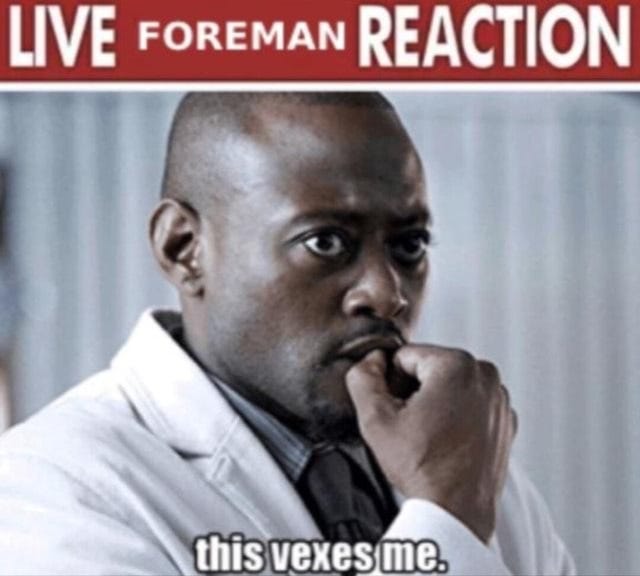
While I didn’t find this to be a perfect film, I found it to be thoroughly worth watching. In an era of cinema dominated by sequels, reboots, cheesy horror flicks, comic book movies, and etc., any unique, well made film would be a blessing, and this one has the bonus of valuable Orthodox messaging. In the future I would like to see this concept of a “contemporary Orthodox movie” developed, though only if God wills it. There could be a danger in relying to heavily on films as a part of Orthodox culture similar to how “Pure Flix” films once took over Evangelical culture in the mid to late 2010s. Time will tell if films like this baptize our secular culture or if they represent more of a spiritual distraction. Once again, I found this film to be worth watching, and I would rate it a 10/10 in terms of the message with how it made me think. However, solely as a film I would rate it around 7.5/10, still thoroughly above average.
Britannica defines “Blaxploitation films” films as: “primarily produced in the early to mid-1970s, showcased Black actors and targeted Black urban audiences.” While these films often aim to show empowerment of black protagonists, they also receive criticism for their heavy use of stereotypes.
Per CDC data, black women have the highest rate of abortion of all racial groups in American, 24.4 per 1000, while white women have the lowest, 5.7 per 1000. While this claim might be hyperbole, it’s based in a morbid fact, and the historical involvement of eugenicists with Planned Parenthood. Source:http://dx.doi.org/10.15585/mmwr.ss7307a1
Magical realism as defined by the Cambridge Dictionary is “a style of writing, movies, art, etc. that mostly represents life as it really is but with some events or features that are magical or supernatural”.
The Boondocks was created and written by a black man, with this scene voiced by a black actor. It’s explained the “N***a” in this context refers generally to “any ignorant mother f***er”. In this case the “forbidden word” is used in a similar way to how African American stand-up comedian Chris Rock defines it in an old special.
The Boondocks also depicts it’s main character as being intellectually curious and adept at using technology without being enslaved by it. However, he takes the route of being a radical left wing socialist and his name is a nod to the Black Panther party. Once again we see how Moses the Black breaks from tradition by making it’s protagonist more of a martyr instead of revolutionary.