

Why Aesthetics Matter (Part 2)
Will Beauty Save the World?

Welcome back to part two of Why Aesthetics Matter…no that wasn’t just bait! I’m going to skip past a true introduction, so you can go back to part one first if you haven’t read it and would like to start there (this article isn’t going anywhere). However, these parts function independently, so don’t feel you have to.
Internet Aesthetics and Nostalgia
Previously I addressed how the internet can be a source of “anti-aesthetics” of ugliness and degeneracy, but lets explore how the internet can also be a haven for uplifting aesthetics that ultimately nurture the soul. Early internet aesthetics largely formed in the cultural milieu of the mid to late 1990s, taking up the gen-X aesthetics of their time, this laying the groundwork for beloved aesthetics on the internet such as Grunge/ “Corporate Grunge”, Global Village Coffeehouse, Heroin Chic, and towards the end of the decade Y2K Futurism/Gen X Soft Club. These aesthetics were also impacted by the novel technologies of the time, specifically with CGI and computer aided design coming into infancy. While most professional designs started their ideation phase the old fashion way into the 2010s, with pen and paper or other physical medium, for early adopters computer graphics began to take a roll in all parts of the creative process, being shaped by primitive user interface design and the lo-fi rendering ability of early versions of programs such as Bryce3D, 3D Studio MAX (by Autodesk), and LightWave 3D.
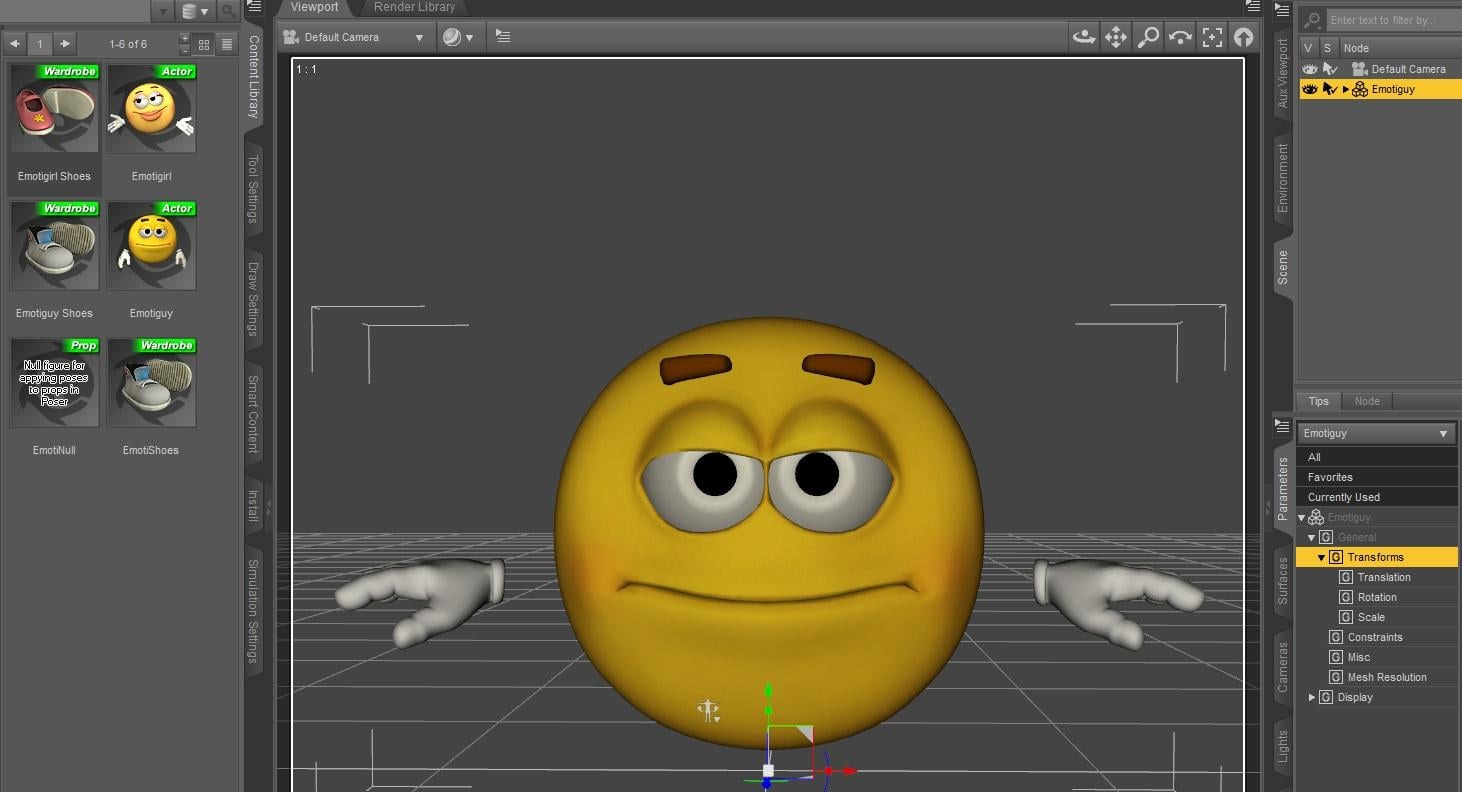
One such example comes in the form of a 3D rigged model called “emotiguy” originally posted through Daz 3D in the early 2000s, now circulated as a popular internet meme. The animation models available on Daz3D and similar platforms were quite obviously shaped by the early, primitive 3D software they were designed in and the largely pragmatic decision to lean into a cartoonish aesthetic instead of chasing realism1. In a similar way, you can see the same trend in the more archaic and cartoonish animated gifs from the Animation Factory platform, which birthed other popular memes. Most famous of these gifs being the absurdist “Dat Boi” meme, the classic gif or still image of a green frog riding a unicycle2.
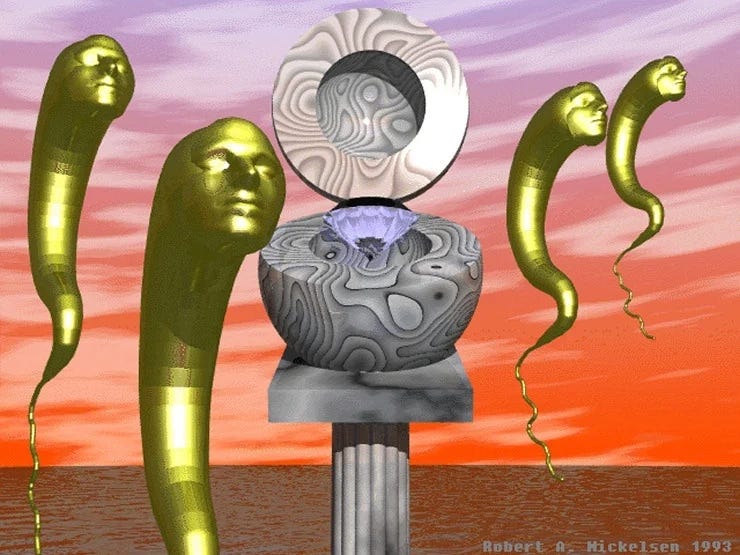
As with all aesthetics, internet aesthetics prove thoroughly that “the medium is the message”, the now classic theorem conceived of by Canadian philosopher and media theorist Marshall McLuhan. Not only are meanings conveyed through certain styles, but the medium itself inherently influences aesthetic choices as well as their presentation, and those aesthetics in turn change the message. In terms of the presentation aspect, when one experiences a painting in person versus on a computer screen the frame the renderings are in fact different, and thus present as similar, but non-equivalent stimuli. It’s a common adage that creative constraint, rather than endless options, breed creativity. Thus the specific limitations of a medium may lend themselves more to creativity and restraint then other mediums which may encourage boring over-indulgence. Lowering the barrier to entry may also open up the space to artists with less motivation, and insincere, shallow, or degenerate messages.
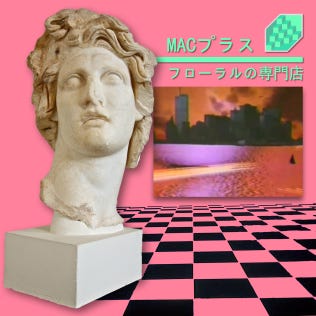

Aesthetic movements or styles may also imply certain philosophies, psychological states, thoughts about the world, and collective “Zeitgeist”. For example, the aesthetics tied to the vaporwave and adjacent genres music genres often repackage or recreate the aesthetics of consumerism abundant in nostalgia, yet still portraying an implicit criticism of the vapid nature of American consumerism and modern day capitalism. Vaporwave, and to a lesser extent it’s less plunderphonic cousin synthwave, are perhaps the best example of how internet aesthetics have implicit messaging. Somewhat adjacent to Vaporwave’s message we have the concept of “the backrooms” and other photographed or synthesized liminal spaces providing a similar critique of corporatism through a lens that leaning closer to horror elements. With the Backrooms movie we see that these internet aesthetics are fast becoming the mainstream aesthetics, perhaps whether their creators like it or not.
Physiognomy and the Art of Judging a Book By It’s Cover


According to Britannica, physiognomy is “the study of the systematic correspondence of psychological characteristics to facial features or body structure.” While it’s widely considered a pseudoscience, for the purposes of this article the veracity of it’s claims are not our concern. It matters only that these practices are ancient, yet carry into the modern day with newfound relevance, with the fast growing creator Prosopa Insights3 being an example of a rapidly growing physiognomy influencer who does face readings of popular celebrities and historical figures. If we look back in literature, Dostoyevsky also makes frequent references to physiognomy in his novels in order to flesh out certain characters (see quote below). We can take a look even further at Aristotle writing down the earliest known educational works about physiognomy. Like the ancient Greeks, the Arabs, Chinese, and Latins all studied their own flavors of physiognomy, making it a global historical phenomenon4.
“A special feature of this physiognomy was its death-like pallor, which gave to the whole man an indescribably emaciated appearance in spite of his hard look, and at the same time a sort of passionate and suffering expression which did not harmonize with his impudent, sarcastic smile and keen, self-satisfied bearing.”
-Fyodor Dostoevsky, The Idiot
While physiognomy tends to deal in intricate facial features, which some say can change, it’s inseparable tie to genetics makes it particularly controversial. In all probability many of the methods of physiognomy may be erroneous, and some of it’s judgements used with hateful intent, but most practitioners study it in good faith to better understand others and themselves. Even if you don’t study physiognomy, or you deny that physical traits correspond to personality, often our subconscious initial judgments of people rely on physical appearances in correlation with our tribalistic survival mechanisms. People undeniably get treated differently based on how they look, and to a certain extent we just need to accept this as a sober reality. Perhaps if society treats treats a person a certain way based on certain facial traits, it follows that they could learn a certain pattern of behavior and internalized self image. It’s also entirely possible for a person to have a positive or negative “aura”, chiefly through posture and body language, that bleeds into one’s embodied aesthetic imprint. Unfortunately, sociopaths and other manipulators are often good at putting on a fake smile and even faking body language, so we have to be cautious about taking all visual signals of positivity at face value (no pun intended…ok maybe intended a little bit). Perhaps one shouldn’t definitively judge a book by it’s cover, but the cover serves a purpose and in practical reality it often dominates initial impressions.
The Birth and Death of an Aesthetic Cultural Zeitgeist
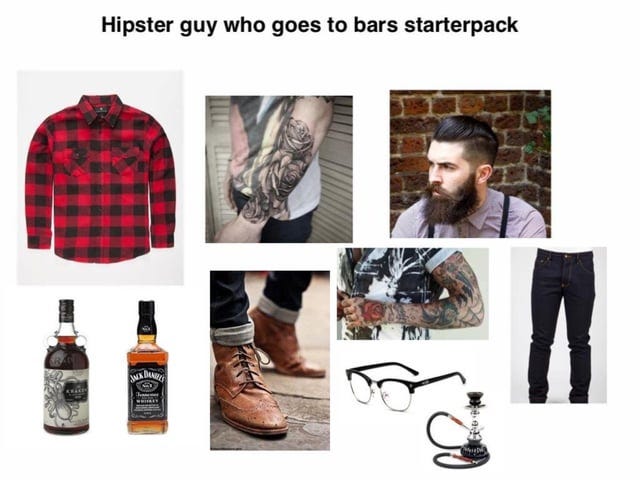
Guess what guys, we do indeed live in a society...and that means that aesthetics exist within the context of a Cultural Zeitgeist. Sometimes the underlying communication of an aesthetic does not come from the individual, but from the broader culture and sub-cultures of a society. Having individual aesthetics in itself communicates a culture of individualism, while a more uniform aesthetic reflects more collectivist values. We also tend to associate certain aesthetics with the common sociologically defined generations, thus contributing to their stereotypes. Take for example how much of Gen Z now derides the “stomp clap” indie music listening, urban coffee shop dwelling, hipster millennial stereotype, and how this style and aesthetic now reads as “uncool”, “soft”, “passe”, and “trying too hard”. For whatever reason a cultural movement, subculture, or specific generational strata collectively picks aesthetic values which approximate their shared values to set themselves apart from the “bland” older generation or from those they view as outgroups.
You can look at how goths wear dark clothing, dark makeup, suspiciously Catholic crosses, piercings, and tattoos to rebel against the yuppies, the jocks, the WASP fundamentalists5, or the snobby country club Republican crowd. However, it tends to happen that this shared wish for uniqueness coalesces into common trends, thus requiring novel aesthetic ideas or reintegration of old ideas to stay ahead of the curve and avoid looking like everyone else. The spirit of the hipster embodies this urge to desperately be cool, or even do things “before they are cool”, though ironically the hipster of yesteryear now seems unfashionable in the current mid 2020s Zeitgeist.
Art Movements Represent Ideological and Cultural Shifts

When we look at art history, we see that art movements typically line up with changes in ideological movements and fluctuations in culture. Though some of this appears more obvious in retrospect, potentially the result of historians trying to weave an easily digestible narrative of history for laymen, we do see correlations to certain eras and historical events nonetheless. In times of war and turmoil, the aesthetics may turn towards a bleak expression of surrounding reality or a blatant escape from this oppressive reality. In the blood stained and tumultuous aftermath of World War II, a lot of the art reflected the mass loss of human life, and the conflicting values of Democracy, Monarchy, Communism, and Fascism. One could visually see in Nazi Germany how the culture switched rapidly from the values of Weimar Germany to those in line with fascism, and how Hitler, himself an art school reject, waged war upon modern art. If this art had no bearing on the culture and ideology, then why go through the effort of policing it? Likewise, when communism took over Russia, and other Slavic Orthodox Christian lands, why did the communists make such an effort to defile icons, destroy the architecture, while funding new soviet arts and design, and creating massive propaganda campaigns involving visual mediums?
,_Albright-Knox_Art_Gallery.jpg#/media/File:Giacomo_Balla,_1912,_Dinamismo_di_un_Cane_al_Guinzaglio_(Dynamism_of_a_Dog_on_a_Leash),_Albright-Knox_Art_Gallery.jpg)
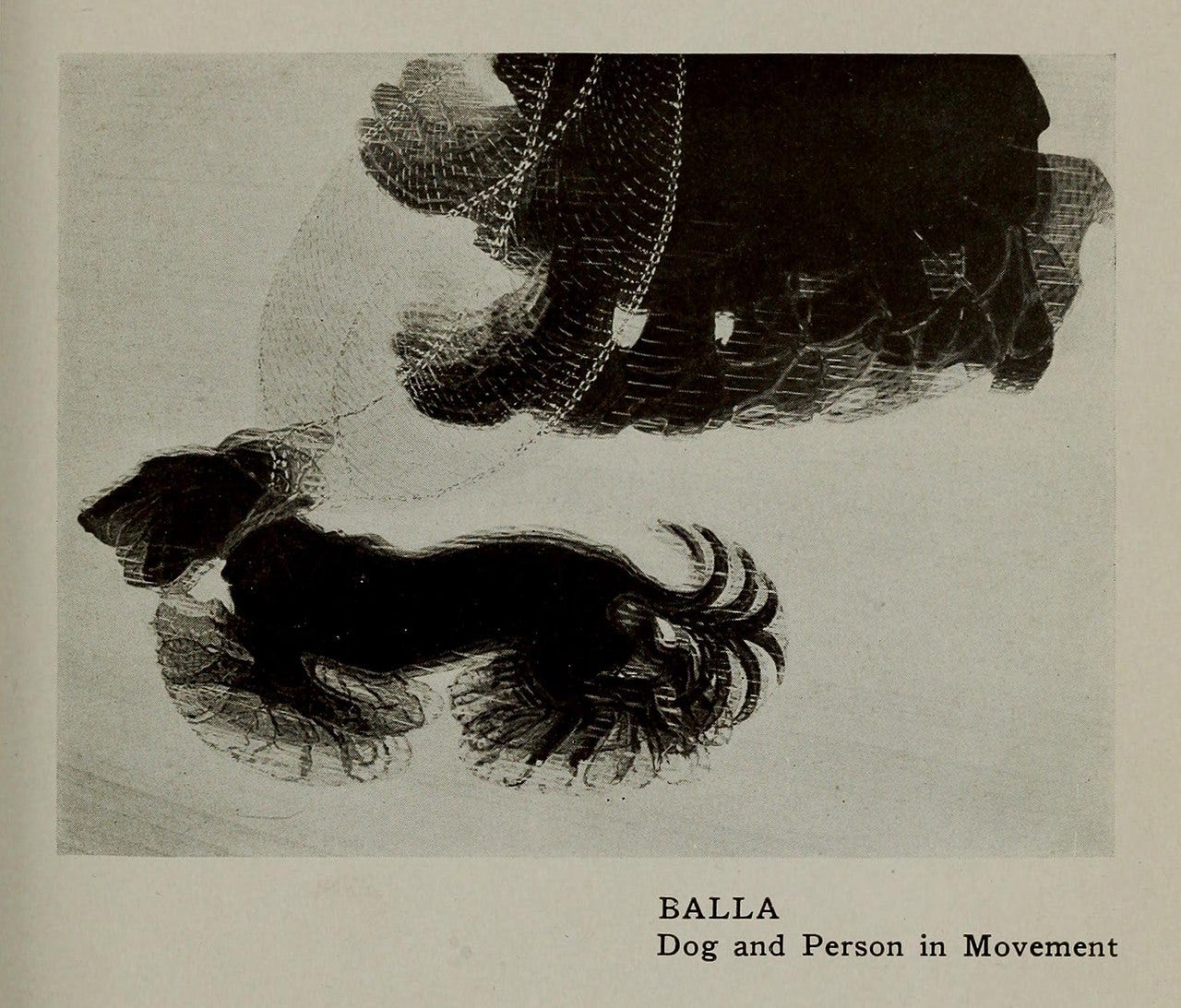
While art movements can be forcibly changed to meet ideological demands, not all changes occur in the manner of top down social change. For example, the movement of Futurism, centered predominantly in early 20th century continental Europe, straddled the line between artistic and social movement. According to Britannica, Futurism was coined by Italian Poet Filippo Tommaso Marinetti in his 1909 Manifesto, titled Manifesto del Futurismo, with the aspiration of throwing out old conventions in favor of “change, originality, and innovation”. This manifesto went so far in glorifying technology, motion, and action that it glorified violence and advocated for the destruction of archaic public institutions such as libraries and museums (one could assume Churches would also be seen negatively). You can see these ideological values reflected in the art, which emphasize motion, violence, and sometimes general chaos. Most famous of these would perhaps be Giacomo Balla’s “Dynamism of a Dog on a Leash”, or Umberto Boccioni’s “The City Rises”. This movement would also expand into Russia as seen with Natalia Goncharova’s “The Cyclist”, showing that ideology can cross borders and mount a conquest on a foreign culture through the arts. While Futurism came and went, we can see it’s modern bastardization when the influencer promoting a drop shipping course asks “what color is your Bugatti?”, something that feels eerily akin to the meme “you can kill the man, but not the idea”.
Politics, War, and Aesthetic

We all know that propaganda, flags, and symbols go alongside any political revolution or regime worthy of historical note. The field of graphic design profits greatly from these changing tides, and to have the artists and creatives on your side will always bolster a political party or organization in the culture. To the chagrin of many political theorists and philosophers6 who might wish that pure logic and reason would win over the unwashed masses, you often need to move hearts in order to change minds. There’s no better way to effect this change than through imagery that even borderline illiterates can understand instinctually. If you give up on aesthetics, you give up on a crucial battle ground just as important as the rest, such as the art of the debate stage, political musical anthems, and impassioned speeches.
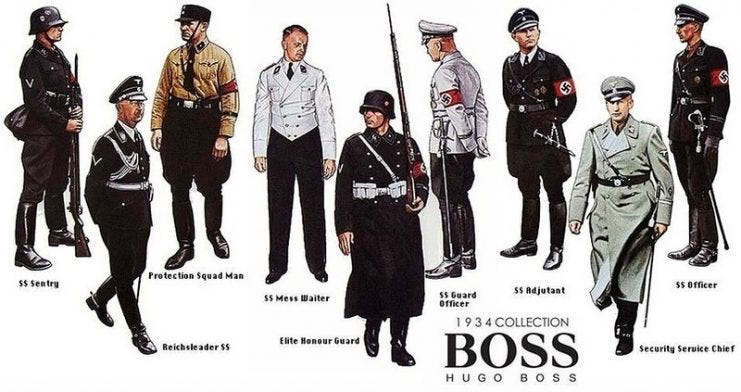
It’s a curious example that one of the most infamous and violent leaders of the 20th century failed at art school, but retained a genuine eye for aesthetics. That’s right, we have to admit that Adolf Hitler did something right7, he chose an effective symbol for his movement, simple and recognizable, with the infamous swastika fearfully covering more than half of continental Europe at one point. It didn’t stop there either, fashion giant Hugo Boss would like you to forget that they once provided well tailored suits to the Nazi military, chiefly the SS. Perhaps the Nazis have come to define political evil so thoroughly exactly because their aesthetic and style were so well defined and memorable. Nazi villains star predominantly in popular Hollywood blockbusters from their overt inclusion in Indiana Jones to being the primary inspiration of the Empire in Star Wars (“Stormtroopers” comes directly out of the SS). In the automotive space too, Ferdinand Porsche’s Volkswagen Type 1, created to be the “people’s car” of the Nazi party, would later be renamed the “Beetle” and sold alongside the Type 2 “Bus” in America, both becoming icons of the peace and love hippie movement in the 60s in a sort of “aesthetic appropriation” (which I will discuss further below).

Hitler stole the swastika, and despite it’s ancient origins and Eastern religious uses, in the West we all associate it with just one ideology, showing exactly how deeply a symbol can be captured. However, before things become set in stone a battle may occur to capture appealing aesthetic items or to associate the opposition with a negative effective satirical effigy (i.e. too late, I’ve already depicted you as the soyjak). Today right wing and left wing memes, chiefly shared as images and videos, exhibit this flux in record time. One such example would be when the UK Home Office funded a “counter extremism” video game called Pathways: Navigating Gaming, The Internet & Extremism8 to combat “anti-migrant and anti-muslim” sentiments, with the main far right antagonist in the game being a purple haired goth girl named Amelia. Of course the online alternative right took this and ran with it, because despite the abundance of “trad wife” content in the right wing, the internet generally loves goth/alt girl aesthetics. Instead of combating the right wing, the opposite, unintended effect transpired with the right wing appropriating this symbol for themselves by creating memes, ai generated videos, and other original content. Amelia successfully tapped into the Zeitgeist, but in the process she became actualized as a tool against it’s creators and their mission. Their chief mistake was essentially giving their antagonist such a cool and memorable aesthetic, so what else would they expect to happen? This mistake, and the advantage taken from it, shows exactly why the communication through aesthetics matter in politics.
Religious Iconography and Aesthetic
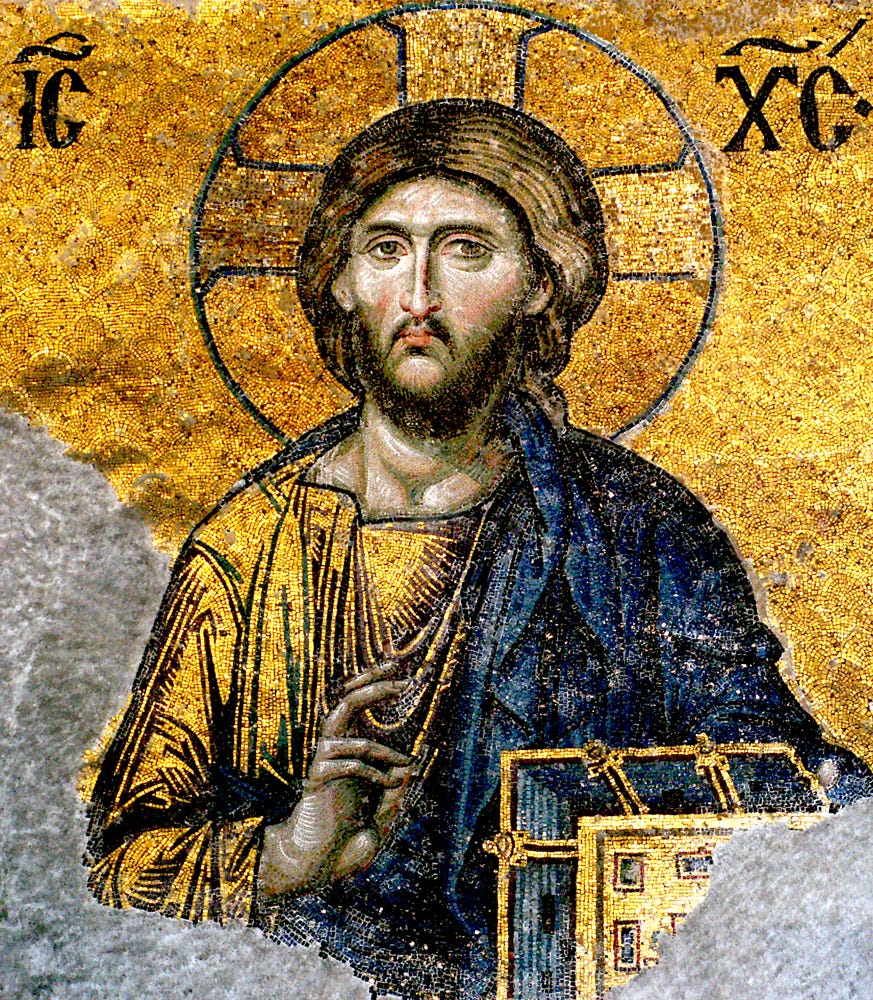

As an Orthodox Christian, I see firsthand how aesthetics are crucial to my faith, with iconography being one of the chief ways in which we experience the incarnation of Christ and the Saints taking on the image of Christ. While imagery and iconography are a contested issue in Western Christianity, it’s place in the East has always been accepted and held as a Holy Tradition, solidified ever since the defeat of the Byzantine iconoclasts at the Second Council of Nicaea (Seventh Ecumenical Council). Before the age of mass literacy, the masses identified with the faith through oratory readings, spoken homilies, hymnography, and our focus here: iconography and symbology. Just because we have mass literacy today doesn’t mean iconography becomes irrelevant, just as we would not say secular art and design are irrelevant because we can convey philosophy or a message through text9. Every religion has imagery as well, even if they don’t like to admit it. Every Protestant Church still has a logo, there’s still usually a few crosses in the Church, and the children’s books don’t shy away from depicting Christ, the Apostles, and any number of the Old Testament figures visually.
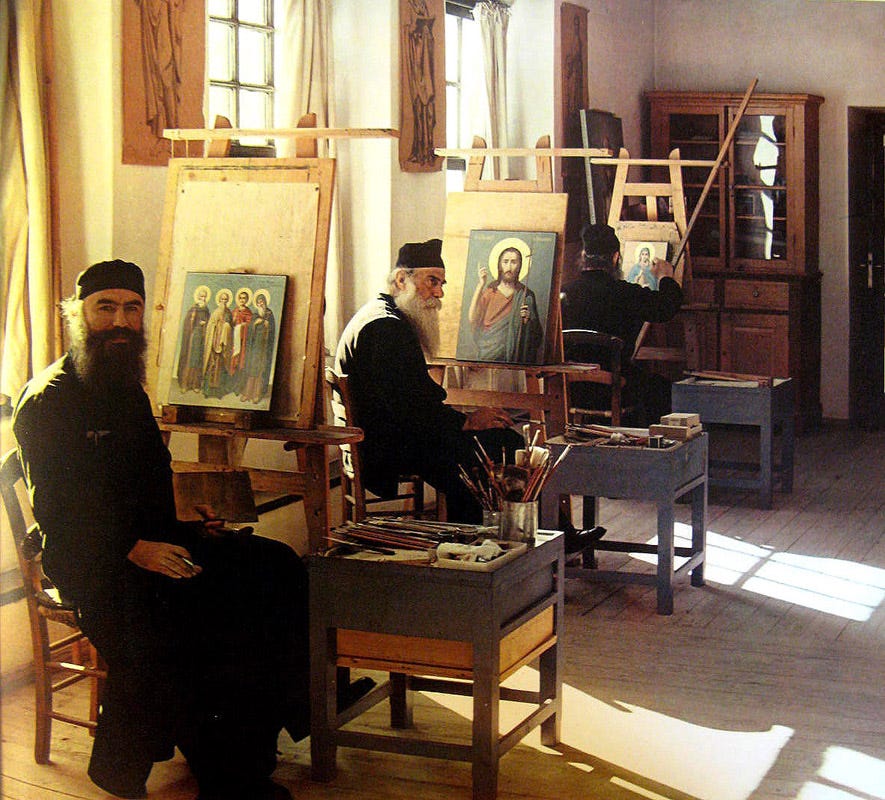
Perhaps we find the main dispute in the question of whether we should reverence imagery, and whether an icon is truly just paint and wood, or whether it takes on higher meaning through depicting a Saint. When we look at representational images, those that are not intended to be abstract or open to interpretation, we recognize that generally the subject of the image references something or someone real existing outside the image. If one kisses the image of a loved one, we recognize that such a person does not do so purely to taste the surface of the glossy photograph paper, as pleasing as that texture might be, but to convey their love and cherishing for that person as if one were literally kissing him or her. There is something special about painted icons that embodies a higher level of representation than a mere photograph, since it depicts not just one snapshot in time of the Saint, but a visual representation of their nature, including details that convey what they were known for and who they were as a person. In the end, a well “written”10 icon becomes greater than the sum of it’s parts, imbued with special meaning and value as a spiritual tool. Icon writers must avoid communicating anything which could be construed as heretical or in discordance with Holy Tradition, thus requiring them to take extra care to make all of their aesthetic choices sober and intentional with the aid of the Holy Spirit.
The Psychology of Aesthetic Perception

.jpg#/media/File:HobbyTown_USA_Oshkosh_interior_under_construction_2002_(The_Backrooms).jpg)
Aside from cultural influence, what makes us gravitate towards certain aesthetics over others? Well one explanation could be familiarity. From a young age we are exposed to certain aesthetics, specifically certain textures, color pallets, visual languages, and forms in reference to other stimuli, whether positive or negative, in something akin to classical conditioning. Perhaps someone with a certain aesthetic choice of clothing treated us well growing up, and for whatever reason we have fond memories of that person, thus the stimuli of this aesthetic gets filed away in the same place in our brain. Perhaps a caregiver wore a certain type of attire, so we learn to associate it with safety and security, and are drawn naturally to people who mirror that aesthetic. Likewise, if a traumatizing event or a person who treated us poorly becomes associated with a certain aesthetic, we may be conditioned to have a negative or “fight or flight” reaction to such an aesthetic. In the most extreme cases a phobia can be tied to an aesthetic, such as coulrophobia (the fear of clowns) or trypophobia11
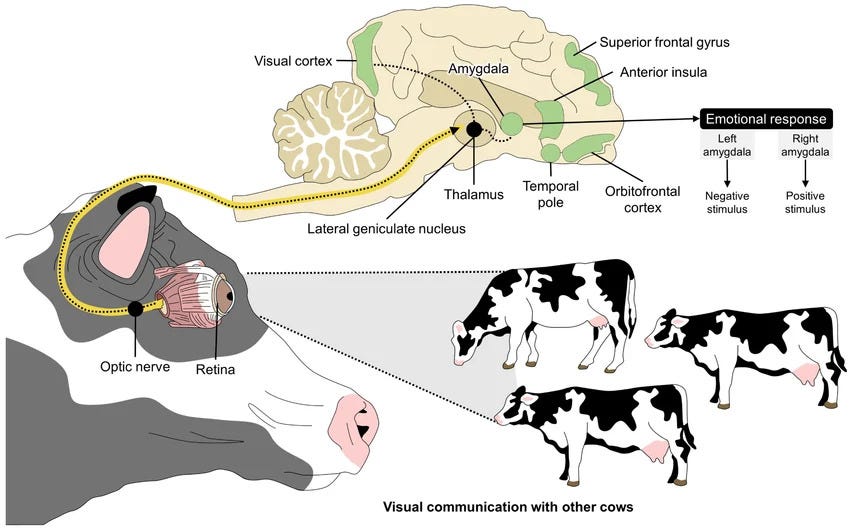
While I do not fully subscribe to the school of “evolutionary psychology”, I broadly agree with the notion of visual identification being a survival mechanism in human beings. We learn to preselect what’s good and bad, safe and dangerous, poison and healthy, and etc. based on things learned both firsthand or through social inculturation. This by no means relegates aesthetic definitions and visual categorization to being entirely arbitrary simply because they tend to be relative. We need to make these distinctions for survival, and to make sense of the data the world gives us as more than a bombardment of pure unadulterated static12. Pure relativists in the field of sociology might argue that all choices of aesthetic are purely specific to cultures and individuals, and that nothing spiritually deeper exists, such as objective or universal standards, especially in terms of beauty. In the same breath, they will state that we are all human, and equal, and that there are no meaningful biological differences between human beings globally aside for superficial exterior traits13. This “blank slate theory”, which posits we are all merely receptacles of stimuli, doesn’t add up to what we see in reality, that different cultures arrive at similar aesthetic choices, and that aesthetic choices can be influenced by powers beyond human imagination and beyond the commonalities of environment and biology. When the aesthetic values diverge between cultures, this doesn’t necessarily disprove universalities, as exceptions don’t define the rule, and can often be explained logically. All this said, at some point we reach the limits of psychology in explaining the aesthetic world, because ultimately the mind and soul are connected to metaphysics and the spiritual realm.
The Psycho-spiritual Nature of Artistic Endeavors
.jpg#/media/File:Francisco_de_Goya,_Saturno_devorando_a_su_hijo_(1819-1823).jpg)
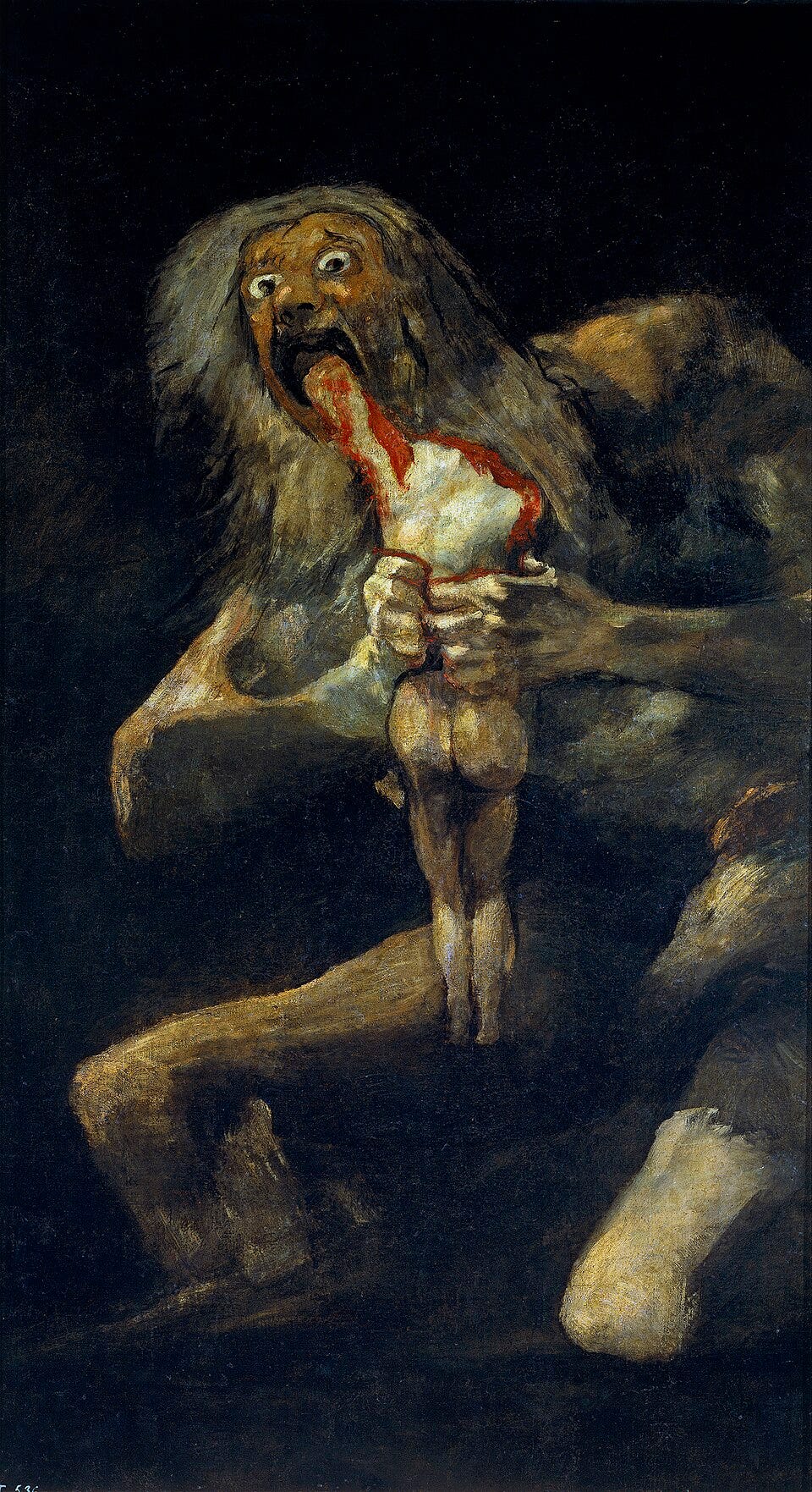
One might look at the “art of the disturbed” and wonder why all art that depicts some sort of “darkness” or depravity tends towards the same visual language in differing cultures. For example we can look at 20th century Austrian painter Egon Schiele’s work, an obviously mentally ill and depraved man, who was driven to an obsession with depicting increasingly morbid and sexual imagery (in at least one case even involving an underage woman). You can also look at the works of the 18th/19th century artist Francisco Goya, and how he often took up similar morbid themes, such as with “Saturn Devouring his Son”, albeit with less sexual impropriety but nonetheless symbolism and imagery bordering on the demonic. A good explanation, though one that rational science would reject, could be common demonic forces and the passions preying on those with psychological ailments. I by no means deny that psychological states of distress and mental illness are very real, and that they involve to some degree the chemistry of the mind, but that doesn’t rule out demonic imaginations filling the mind during such a state. Once we realize that these imaginations enter the mind through means of spiritual and moral unwellness, we must realize that depraved people can actualize such ugliness into the world not just through evil actions, but also through art, architecture, design, and other visual creation, though crucially spiritual revival and wellness can fix this trend.
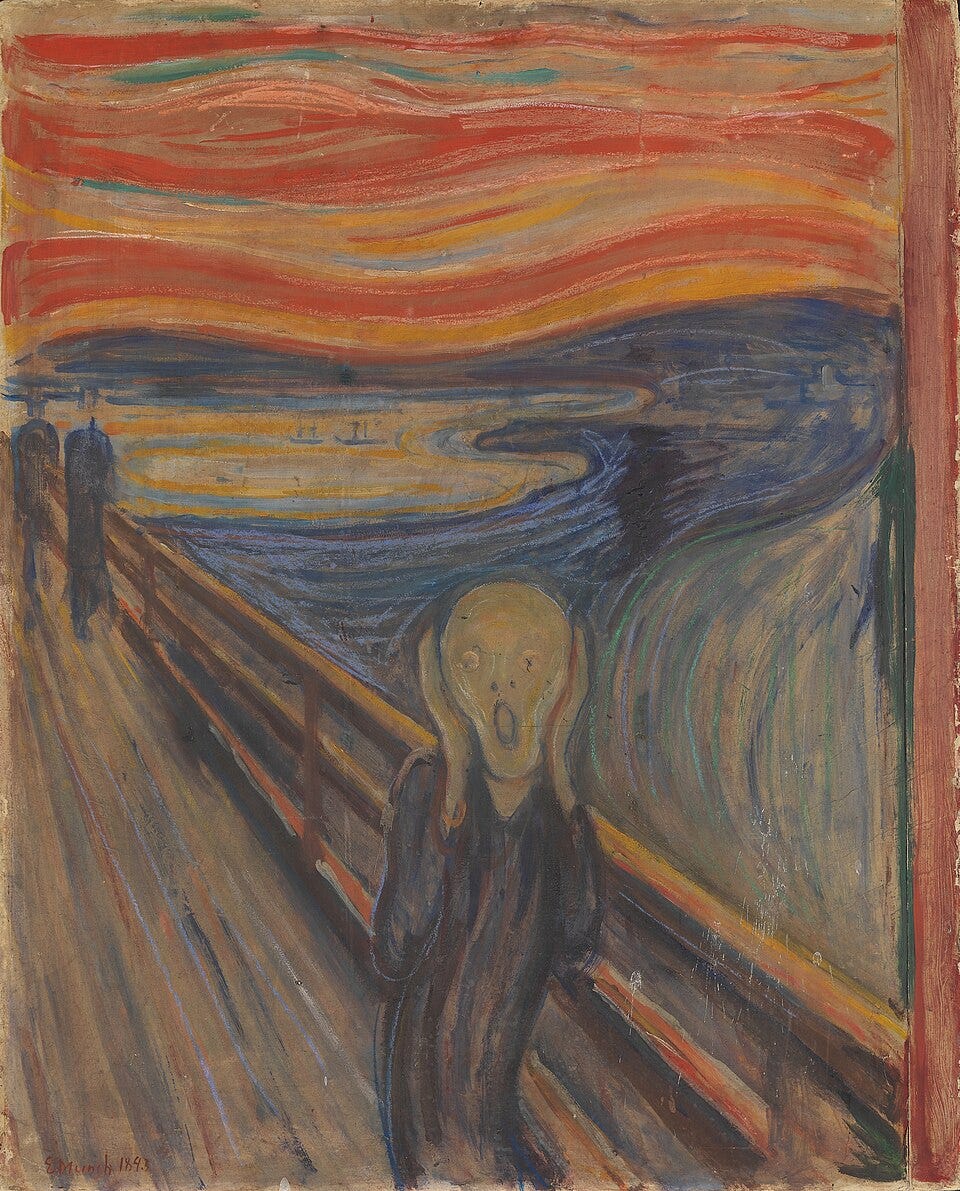

While we all recognize that imagery can be representational of the external world, imagery can be equally representational of the internal world, and yet also present as something between the abstract and representational (in the traditional sense). Often artists choose to go against pure realism, and instead draw from their internal world, which in my Orthodox Christianity worldview has a tether to the spiritual world. Naturally this spiritual tether cohabitates with one’s internalized experiences in life. For this exact reason there are certain prayers which iconography painters must recite, and ways in which they should spiritually guard themself from impurity when creating religious imagery. Likewise, in the secular art world spiritual states influence the art. There can be a value in a depicting a particular point of spiritual struggle, but if one becomes spiritually dead, no longer even struggling against the passions, the quality of the art typically suffers. There might be merit to not just deriding, but understanding the aesthetics of the spiritually afflicted, with the famous phrase being “art should comfort the disturbed and disturb the comfortable”14, but we should be cautious of staring into the abyss, lest it stare back into us.
Cultivating Positive Aesthetics for a Better Life

As much as we can, and where practically possible, I think we should cultivate aesthetics which are thoughtful and in line with righteous values. As mentioned in part one, clothing is one such way we do this, communicating and projecting our values and sensibilities out into the world. If you want to be more spiritually uplifted, and find yourself lacking in this regard, surround yourself with icons which draw your spirits back into that spiritual reality. If you can paint your walls, maybe don’t have every room be a sterile, white canvas, and if you do, at the very least acquire some paintings, sculpture, and plants which help lighten the mood and bring life into the space. When you decide to do a project that involves a visual element, even if it’s something as simple as an album cover or a logo, treat it seriously, and if you’re not artistically inclined consider hiring a designer. I’m not here to police your aesthetics, at least not in this article, I’m only here to tell you that they do matter, and that you are not immune to the role they play in your life and the world at large.
Beauty Will Save the World
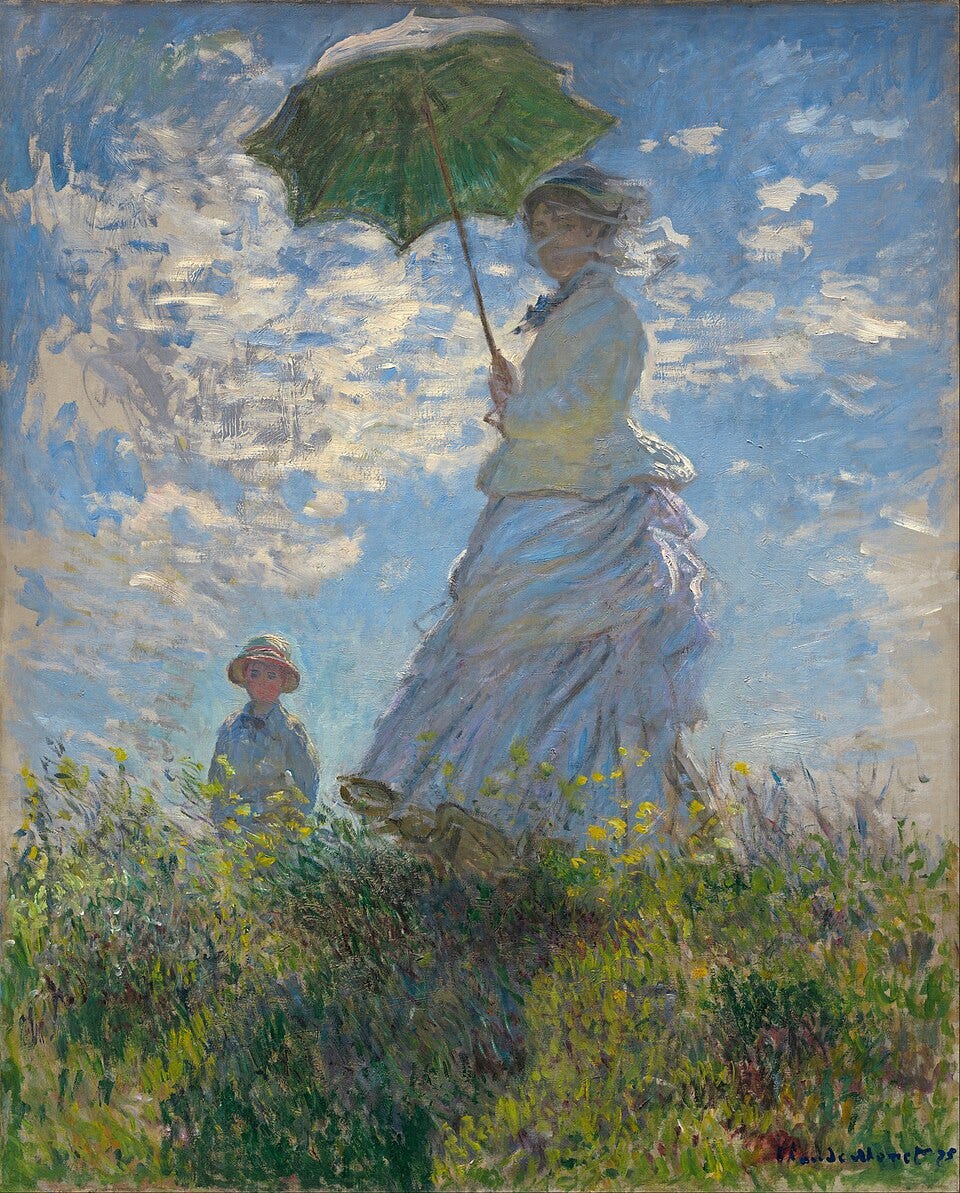
As the novelist and philosopher Dostoyevsky said in his novel The Idiot, and as I have repeated many times before, “beauty will save the word”. It’s a powerful and emotional statement, but what does this mean, and what are it’s implications? Well, in context we can infer that this points to a deeper sense of beauty, not one detached from aesthetics or the material world in a gnostic sense, but a metaphysical beauty transcending into what the western mind might conceive of as the spiritual world15. When people say “beauty is only skin deep” or “beauty is in the eye of the beholder”, these idioms might have cornel of truth, but they obfuscate the fact that while aesthetics and visual qualities often represent the lesser good, they are in fact good. Perhaps it’s sometimes profitable to put aside aesthetic values in service of the higher goods, like truth, charity, physical wellbeing, or achieving human connection, but to worship ugliness and brokenness as positives does not represent virtue. Seeing past ugliness and brokenness to a beauty that lies underneath exemplifies a virtue, but kinship directly with ugliness and brokenness often proves to be at best low self esteem and at worst deeply internalized nihilism.
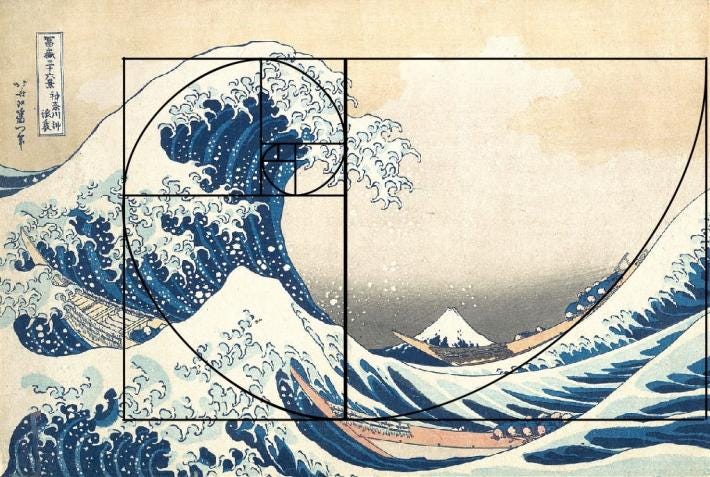
When we say that “beauty will save the world”, the argument isn’t in favor of superficial beauty or of puritanical standards that lead to eugenics, elitism, and tyranny. We should remember that beauty exists in this imperfect world we inhabit, and that the existence of beauty amongst the turmoil is just about the best argument for the providence of God as any. We should be careful not to idolize beauty in itself, but view it as an energy from God. When we walk in nature, we see the beauty of God’s creation, we see beauty in the face of a beloved person, we see beauty in the many things man creates (not in the ex-nihilo sense), and this beauty has the power to lift us up out of despair and to make life tolerable even under the worst oppressions. That is why beauty will save the world, because it will lift us up out of nihilism, it will unite us in the face of atomization and the spirit of annihilation, ultimately pointing lost souls towards salvation who would otherwise remain trapped with a hardened heart. That’s why aesthetics matter, both as a concept and manifestation in material, because for most it participates in our existence in a way that profoundly impacts our soul, not just as an afterthought or exclusive tool for the prideful and disingenuous.

If I can leave you with anything, it’s that truth and beauty should be synonymous. Truths that don’t lead ultimately to beauty are incomplete and hardly truth at all, and beauty that doesn’t lead to truth can likewise hardly be considered true beauty at all. So embrace aesthetics, but embrace them with meaning and Christlike love, as this represents the highest good.
My basis for this section of the article comes from this video essay: I Found this Emoji's Original Creator after 21 Years.
I recommend watching this video by YouTuber Lugalan if you want to know about other early 3D animations on the platform “AnimationFactory.com” and their unique roll in internet culture: Where Did These Weird 3D GIFs Come From?
I recently figured out Prosopa Insights is a fellow Orthodox Christian, so I don’t mind supporting him even if I don’t agree with all of physiognomies finding. At the very least his videos are good entertainment.
For further information on the history of physiognomy I recommend consulting this Britannica article: Britannica - physiognomy
Meaning “White Anglo Saxon Protestant”, added “fundamentalist” to imply an extra level of prudishness going back to the tradition of the overly strict puritans. Ironically many gothic aesthetic choices are overtly inspired by Catholicism, perhaps as an opposition to WASP hegemony.
*cough* Stefan Molyneux *cough*
If you want to take this in bad faith and out of context, just know that you are bottom feeder who took the bait. You know exactly what I mean by this, and what I don’t mean. This is to say it was an effective decision and strategic choice others should not be above copying.
You think the British would know how to use an Oxford Comma.
As many apologists of iconography such as Jay Dyer have pointed out on occasion, written text is inherently iconographic (it exists in the visual world).
Icons are often considered to be “written” and not merely painted, perhaps in part because they convey a message and are intended to be “read” by those who receive it.
According to the NIH this is the “the fear of, or aversion to, clusters of holes”. Source article for further context: Trypophobia: an investigation of clinical features
Referring chiefly to TV static, or visual “noise” which cannot be distinguished as representing anything meaningful to the recipient. Also invoking a sense of “visual overload” such as when you play multiple iterations of the same video playing over top of itself in thousands or even millions of duplications.
The truth likely lies somewhere in-between, that there are distinctions in genetic biology which may effect different psychological states among different people groups or subset of individuals, but that there are enough meaningful similarities such that there are accurate assumptions to be made about general, universal human psychology.
Quote by Cesar A. Cruz, taken, “from the title of his 1997 poem, “To Comfort The Disturbed, and to Disturb the Comfortable: Onward Children of the Sun,’”. Source: Paisiano Online
Fr.Stephen De Young explains it best that there is a way in which the spiritual “world” is “on top of” our reality, and that it is not a separate “realm” that’s closed off in the way which many contemporary Christians (most often protestant) conceive of it. Many Saints were able to access the spiritual reality in this life as a result of their advancement towards attaining Theosis, or “Christlikeness” in the simplest lay terminology.